


Blog Details
How To Source Jewellery For Your Small Business: A Complete Beginner's Guide
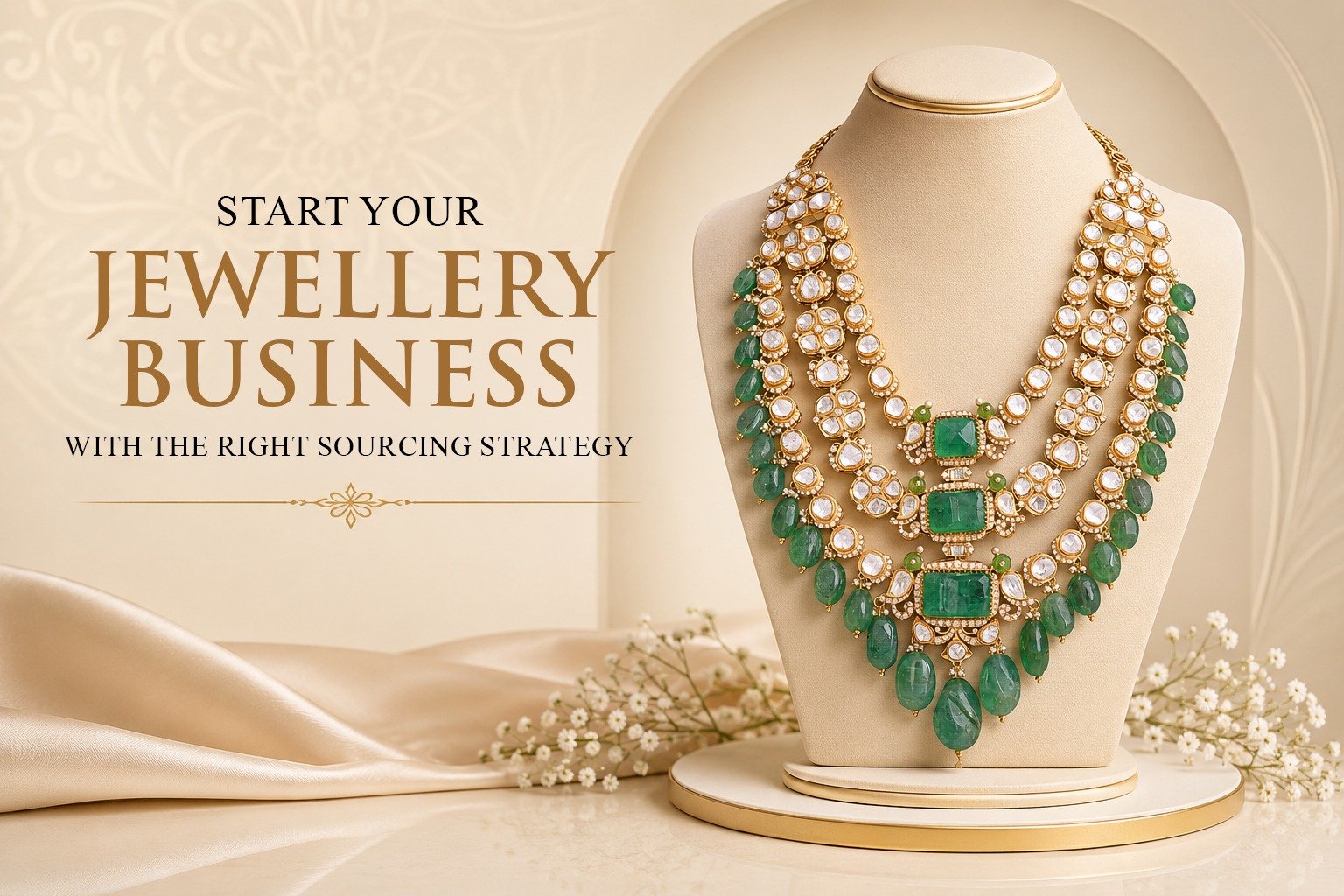
Sourcing jewellery for a small business really comes down to a handful of things. These are picking the right category to sell, finding suppliers you can actually depend on, going through samples carefully, understanding MOQs, weighing up pricing from different places and being sensible about how much inventory you take on before quality is confirmed. It is not just about buying pieces that look good in photos. It is building a supply chain you can trust as your business grows.
If you are exploring options with jewellery manufacturers in Jaipur, getting these basics right early will save you time, money and a lot of stress later, especially once orders start coming in faster than expected.
What Does Jewellery Sourcing Mean?
Jewellery sourcing is simply the process of finding and selecting the products, materials or manufacturing partners that supply your business with the pieces you sell. This can mean buying ready-made stock from a wholesaler, working with a manufacturer to create custom designs or picking pieces from local markets to test what sells.
For a small business, sourcing is one of the most important decisions you will make because everything else, from pricing to customer satisfaction, depends on where your jewellery comes from and how consistent that quality is over time. Many new business owners underestimate this step and focus only on marketing to avoid quality issues once orders start growing.
Why Jewellery Sourcing Matters For Small Businesses
Where your jewellery comes from ends up affecting almost everything else in your business more than people expect when they are just starting out.
- Customers can tell when a piece is well made, and that impression is what makes them trust your brand enough to buy again.
- The price you pay at the source decides your profit margin, so even a small gap per piece adds up fast once you are selling in bulk.
- Poor quality increases returns and complaints, pulling time and resources away from growing the business.
- Sourcing consistently from the same quality level helps your brand feel recognisable, which matters more than most new sellers realise.
- A supplier you can count on makes repeat orders simple instead of stressful.
- Better product selection improves sales, simply because customers respond well to jewellery that feels genuinely well crafted.
Understand Your Jewellery Business Model Before Sourcing
The right sourcing approach depends heavily on the kind of jewellery business you are running, since what works for an online store may not work at all for a bridal boutique.
Online jewellery store
This model works best with lightweight, trending and easy-to-ship pieces that look appealing and travel safely.
Boutique or retail store
Retail spaces need display-worthy, premium pieces with designs that can be repeated consistently across seasons.
Bridal jewellery business
Bridal buyers expect statement pieces, traditional craftsmanship and the option for customisation.
Instagram or exhibition-based brand
The brands need visually striking, fast-moving designs that can easily stand out among others.
Private label jewellery brand
This model requires custom designs, branded packaging and a manufacturing partner who can support you long term.
Before sourcing products, it is important to understand how to start a jewellery business, including niche selection, budget planning, customer targeting, branding and pricing.
Decide What Type Of Jewellery You Want To Source
Small businesses often make the mistake of sourcing random products without a clear category in mind. This usually leads to a scattered inventory that is hard to market. Defining your niche first makes every sourcing decision easier.
Traditional jewellery
This includes Kundan Polki jewellery, Open Setting jewellery, Jadau Polki Jewellery, Meenakari and Temple jewellery designs rooted in heritage craftsmanship.
Bridal jewellery
Chokers, long haars, statement earrings, maang tikkas, bangles and waist belts fall under this category.
Fashion jewellery
Daily wear and party wear pieces such as trendy earrings, rings, chains and bracelets are ideal for fast-moving inventory.
Gemstone jewellery
Emerald, ruby, sapphire, pearl, rose-cut and semi-precious stone pieces appeal to a more specific buyer.
Custom jewellery
This works best for boutiques and brands that want to offer uniqueness to their customers.
Where Can Small Businesses Source Jewellery From?
There are several channels available, and each one suits a different stage of business.
Direct jewellery manufacturers
Working directly with manufacturers is best for custom designs, bulk orders, repeat production, private labelling and maintaining long-term quality control. This is your route to having more control over the end result.
Wholesale jewellery suppliers
Wholesalers are ideal when you need ready stock and want to select products quickly without waiting on production timelines.
Local jewellery markets
Visiting local markets is a good way to research trends and discover new product ideas before committing to a supplier.
Trade shows and exhibitions
These events let you meet manufacturers and physically check the quality of their work before placing any order.
Online B2B platforms
These platforms make it easy to compare prices and options across many sellers in one place. But you still need to verify quality yourself since you cannot inspect the piece before you buy.
Most small businesses do not stick to just one channel. The combination of local markets and internet sources is used when there is a requirement to do research or make quick decisions. And then the attention will be given to the manufacturers and trade shows when placing larger orders.
Ready Stock vs Custom Jewellery Manufacturing: What Fits Your Business Best?
|
|
|
|
|
|
|
|
|
|
|
|
|
|
|
|
|
|
|
|
|
|
|
|
|
|
|
|
|
|
Small businesses should start with ready stock or small-batch sourcing because it keeps the risk low when you are still figuring out what customers actually want. Once you have a clearer sense of demand, that is usually the right time to move toward custom manufacturing.
Start With Samples Before Placing Bulk Orders
Skipping the sample stage is one of the easiest ways for a small business to lose money on a bulk order. A sample shows you things no catalogue photo ever will, so it is worth checking closely before committing to anything larger.
- Product finishing to spot rough edges or sloppy detailing early.
- Stone setting makes sure nothing feels loose or uneven.
- Polish to see if it actually matches what was promised.
- Weight can affect how the piece feels in hand.
- Comfort for anything worn close to the skin.
- Size accuracy if you are selling multiple units of the same design.
- Colour consistency, so pieces do not vary from batch to batch.
- Packaging is important because it shapes your customer's first impression.
- Durability to avoid pieces that wear out quickly.
- Repeat-order availability because a great sample means little if it cannot be recreated at scale.
Check Jewellery Quality Before Finalising A Source
Quality checking does not require you to become a jewellery expert. But a few practical checks go a long way toward avoiding disappointment further down the line. These checks are especially important the first time you work with a new supplier because they set the standard for every order that follows.
Metal quality
Confirm whether the piece uses gold, silver, brass, alloy, plating or another material, since this affects both pricing and durability.
Stone quality
Look closely at colour, clarity, shape, matching across pieces and how securely the stones are set.
Stone setting
Stones should never feel loose, wobble when touched or appear uneven against the metal.
Finishing and polishing
Check the shine, smoothness, backside finishing, edges and overall comfort when the piece is worn.
Design consistency
One perfect sample is not enough. What matters more is whether that same quality can be repeated across an entire order, as a business cannot afford to lose its reputation on inconsistent batches.
Understand the Jewellery Making Process Before Sourcing
Understanding the basics of production helps you ask better questions and spot red flags early. The general process typically includes design development, CAD or model creation, casting, stone setting, polishing, finishing, quality inspection and packaging. Knowing roughly how long each stage takes also helps you plan realistic delivery timelines with your supplier, instead of being caught off guard by delays.
To source better products, every business owner should understand the basic jewellery making process, because it directly affects quality, finishing, pricing, production time and customer satisfaction.
Final Jewellery Sourcing Checklist For Small Businesses
Before finalising any sourcing partner, run through this checklist:
- A clear jewellery niche
- A defined target audience
- A realistic starting budget
- Sample approval before bulk ordering
- A suitable minimum order quantity
- Transparent pricing with no hidden costs
- A reliable quality check process
- Availability of customisation
- Packaging support
- A clear delivery timeline
- The possibility of repeat orders
- A sourcing partner who can scale with your business
Working through each of these points before signing on with a supplier gives you a much clearer picture of whether the partnership will actually work long term. It also protects you from the common mistake of choosing a source based on price alone, without considering whether they can support your business as it grows.
Get A Jewellery Sourcing Partner You Can Trust
Ready to work with a sourcing partner you can actually rely on? Shivam Jewels and Art helps retailers, boutiques, and growing jewellery brands with dependable manufacturing and wholesale collections, whether you are looking for handcrafted pieces, traditional designs, or fully custom work.
FAQs
Q. How do I source jewellery for a small business?
Start with the basics, know your niche and how much you can actually spend. Then look around at manufacturers, wholesalers and local markets to see who fits. Do not skip the samples and get pricing locked in before placing any bulk order.
Q. Where can I buy jewellery wholesale for my business?
Wholesale suppliers, trade shows and online B2B platforms are usually the best places to start. Local jewellery markets are worth a visit too for spotting trends at wholesale rates.
Q. Should I choose ready-stock jewellery or custom manufacturing?
Ready stock lets you launch quickly with less risk if you are just starting out. The custom manufacturing option becomes relevant only when you want to invest in your branding and design.
Q. What is MOQ in jewellery sourcing?
MOQ just means the minimum number of pieces a supplier will make or sell in one order. It changes depending on the design and manufacturer. So, it is worth asking about early before you commit to anything.
Q. How much jewellery inventory should a small business start with?
Most people do best starting small with just a few designs to see what actually sells. It keeps your upfront costs manageable while you figure out what customers really want.
Q. Why is jewellery quality checking important before bulk orders?
Checking quality upfront saves you from returns, complaints and the kind of trust issues that are hard to rebuild. It also tells you whether a supplier can actually hold that quality steady across a bigger order.
Q. Is Jaipur good for jewellery sourcing?
Jaipur has a long history of jewellery craftsmanship when it comes to Kundan, Meenakari and gemstone work. There are also several manufacturers there to fit different budgets and styles.
Q. Can small businesses source custom jewellery?
Definitely, plenty of manufacturers are open to working with small businesses on custom designs. MOQs and timelines will vary. But building a good relationship with the right manufacturer makes it much easier over time.




 Chat with us !