


Blog Details
Jewellery Making Process: Step-by-Step Guide to How Jewellery is Crafted
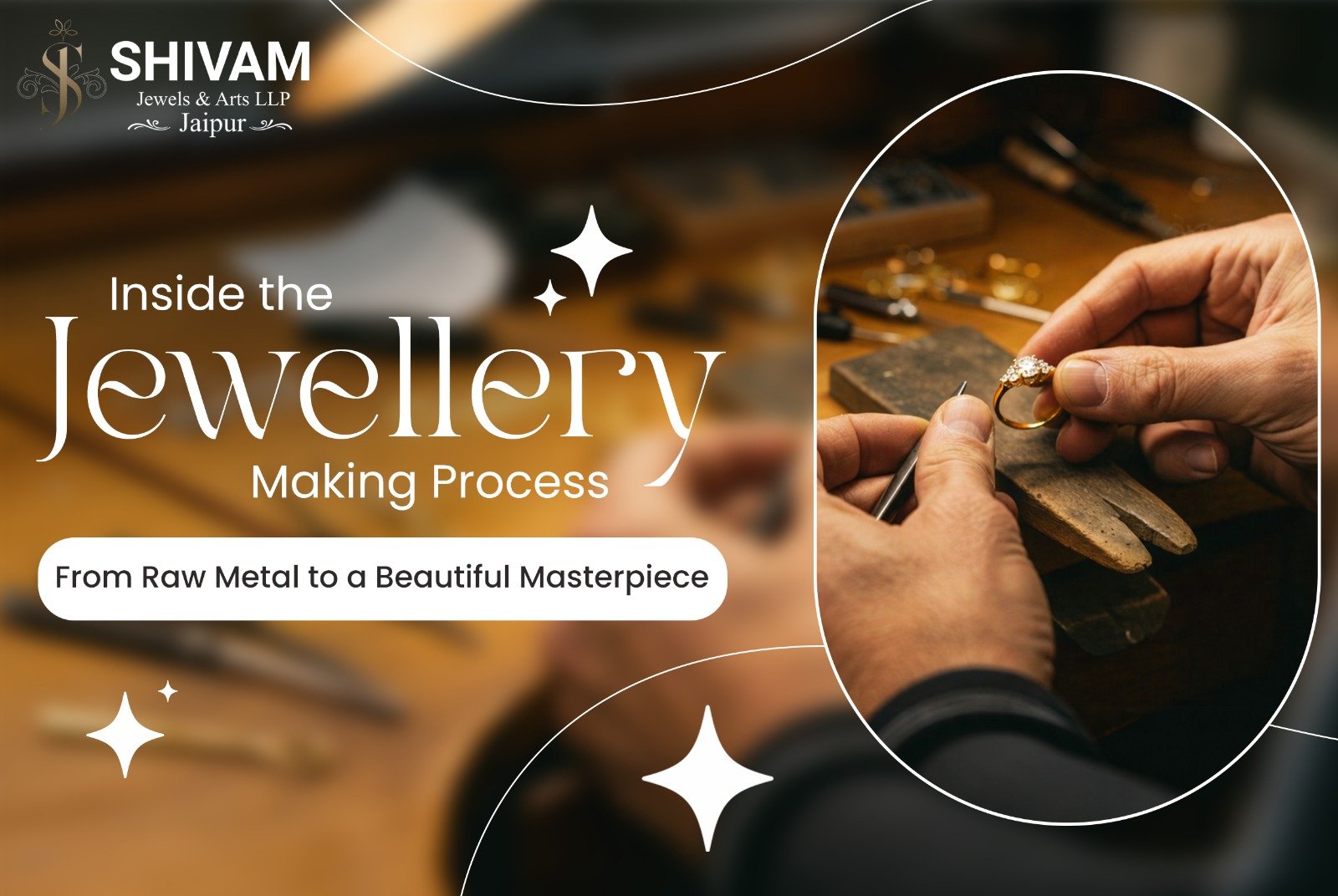
Jewellery Making Process Explained
Jewellery has been the symbol of beauty, culture and personal expression. The process of jewellery making is an interesting mixture of creativity, precision and technical knowledge. Whether it is the raw metals or uncut gemstones, every step must be properly planned and well executed to produce an exquisite work.
Jewellery is a fusion of creativity and precision. Designers have their own ideas and the craftsmen can translate these ideas into reality by means of special tools and techniques. Be it a fine ring, or a fancy necklace, the process of the emergence of the idea to its final form consists of several steps. Knowing the jewellery artistry of every jewellery makes us realise the real worth of a jewellery. This is why Shivam Jewellers - Jewellery Manufacturers in Jaipur are nationally recognized — their mastery of traditional craftsmanship combined with modern techniques sets them apart.
What is the Jewellery Making Process?
The jewellery making process is the entire conversion of the raw materials such as metals and gemstones into the end jewelry products. Not only is it a process of forming materials, it is an organized process that combines art, science and engineering.
The jewellery manufacturing process basically entails the designing, modelling, casting, setting stones, polishing and inspection of the completed product. The stages are linked to each other making sure that the end piece is of aesthetic and quality standards.
This may take a different turn when the jewellery is hand-made or machine-made, although the basic procedures do not change much. The aim is always to make works that are attractive to the sight, strong, and accurate.
Main Steps in the Jewellery Making Process
The steps in jewellery making processe follow a procedural flow that one stage builds on the other to achieve the right perfection and consistency.
1. Jewellery Design and Concept Development
The entire workflow is based on the jewellery design process. Designers draw sketches or computer models according to trends, preference of customers or according to custom needs.
When it comes to designing custom jewellery, the customers can give certain ideas or inspirations which are converted into detailed blueprints. Designers give consideration to size, shape, material, and the placement of gems and the design approach varies greatly depending on the types of jewellery being created, whether it is traditional Jadau Polki, Kundan, or a modern minimal design. In the modern world, Computer-Aided Design (CAD) software is increasingly popular as the means of producing 3D models that are true to scale and then manufactured.
2. Prototype Creation
After the design process is complete, a prototype model of the jewellery is designed. It is usually done in wax or resin to create a physical copy of the design.
The wax model jewellery process is adopted due to the ease in making changes in the process before proceeding to the subsequent stage. This prototype assists in casting and detecting any flaws in the design during early stages.
3. Mold Preparation
Molding of the prototype is done at this stage. The jewellery mould making technique includes the process of coating the waxen model with a special substance which solidifies to create a hole.
The casting mold which results is of a fine texture and captures all the fines in the design. After preparing the mold, the wax inside it is melted off and a hollow that will receive molten metal is left.
4. Metal Casting
Really, the jewellery casting is the process in which the actual metal object is shaped. The metals such as gold, silver or platinum are melted and poured into the mold at a high temperature.
In casting of gold jewellery, accuracy is paramount as it is a casting technique that determines that the metal casts all the details of the mold without faults. The mold is cracked open after cooling and the coarse piece of metal is exposed, which is then cleaned and sent to another process.
5. Stone Setting
Jewellery stone setting comes next where the gemstones are carefully inserted into the metal structure. It is among the most sensitive phases in the process.
Different methods of setting gemstones are employed e.g. prong setting, bezel setting and pave setting. Both techniques would guarantee the safety of the stones and also improve the overall design. The artisans require being skilled to make sure that they fit well and in the right positions so that the stones do not lose their position with time.
6. Surface Finishing and Polishing
The uncut jewellery goes through jewellery polishing so as to give it a smooth finish, and a shiny look. This step consists of filing, sanding and buffing the surface.
The jewellery finishing methods vary according to the preference of the desired appearance, with matte, glossy, textured finishes. The finishing is also done to improve the beauty, but also to eliminate the flaws and cut edges, which makes the jewellery comfortable to wear.
7. Quality Inspection
The last process is jewellery quality check where the jewellery is checked thoroughly to pick the defective, durable and accurate design jewellery.
Hallmarking of jewellery can also be performed as a method of certifying the purity of certain metals such as gold or silver. This will be done so that the jewellery is of industry standards and customer expectation before it gets into the market.
Materials Used in Jewellery Making
Materials used in making jewellery are very important in defining the quality, durability and value of its end result.
Precious Metals
Most jewellery items are made of precious metals:
- Gold - Gold is glamorous and is famous due to its durability and eternal allure and is common in necklaces, bracelets, and rings.
- Silver - It is cheaper and more practical and it is used in both traditional and contemporary designs.
- Platinum - This is very durable and tarnish resistant and is commonly used in high quality jewellery.
Gemstones
Gemstones bring the jewellery color, brilliance and uniqueness:
- Diamonds - They shine and are very strong and are commonly used in an engagement ring.
- Emeralds - This is treasured due to its green color and classy appearance.
- Rubies- they are deep red in color and symbolize passion.
- Sapphires - Comes in many colors, particularly blue, and is valued due to its ability to withstand.
The fine metals and precious stones complement the beauty and cost of jewellery.
Importance of Craftsmanship in Jewellery Production
It is the work of jewellery craftworking which makes normal materials look extraordinary. Experienced craftsmen apply years of experience and eye detail in making every work of art unique and well-designed.
Craftsmanship is even more important in the process of making jewellery. All the cutting, polishing, and setting are accomplished manually and it gives it a personal touch which cannot be replicated with the help of machines.
Good craftsmanship ensures:
- Accuracy in planning and performance.
- Long-lasting durability
- Enhanced aesthetic appeal
- Correct stone installation and positioning.
Even with modern technology, the human touch is still necessary to attain perfection. Not only is craftsmanship a value addition, it entails a story behind every piece of jewellery.
Conclusion
Jewellery making is a multi-phase and intricate process through which raw materials are turned into adorable wearable pieces of art. Design to prototyping: Designing and prototyping are important steps in the process of producing a high-quality final product. From design to prototyping, all the steps are crucial to achieve the desired quality end product.
Technology and expert craftsmanship help to produce jewellery which is not only attractive to the eye but also enduring and significant. This process helps us to really appreciate the effort, care and creativity that goes into each bit of jewellery we put on.




 Chat with us !