


Blog Details
Why Jaipur Is the Hub of Handcrafted Jewellery in India
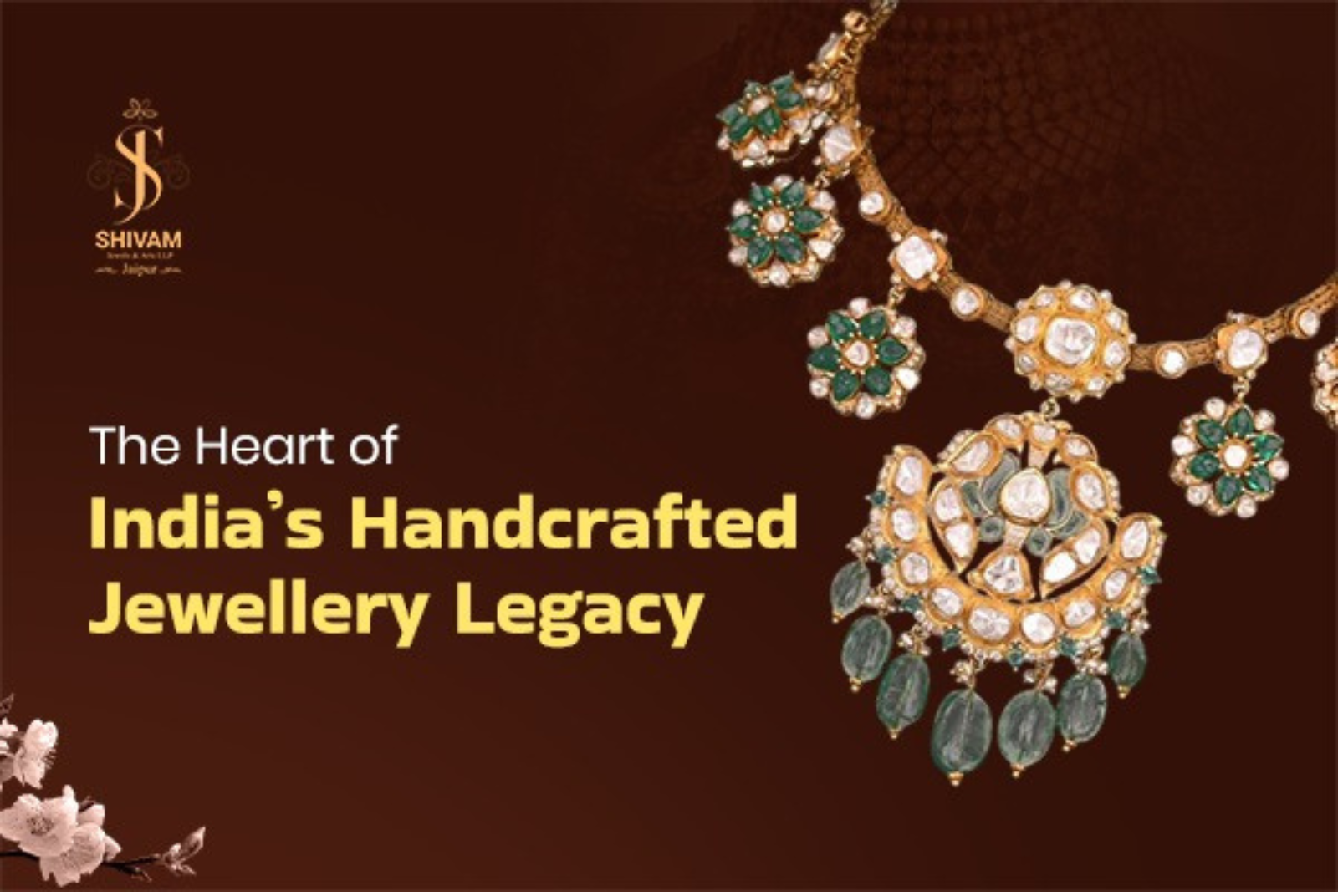
The Pink City of Jaipur is not just a place of the forts and palaces, it is the heart of the gemstone and jewellery business in India. This city has been a home of art since centuries whereby metal and stone are turned into wearable poetry. It is now a world power, with a mix of traditional skills and contemporary sensibility to continue to be the unchallenged center of handmade beauty.

The Royal Heritage Behind Jaipur’s Jewellery Legacy
The history of Jaipur leadership is initiated with the sighted Rajput monarchs especially Maharaja Sawai Jai Singh II, who established the city in the year 1727. However, Jai Singh II was not like many other rulers of his era in that he was a patron of the arts and knew that a city had to have a soul in order to thrive. He invited the best of craftsmen, goldsmiths, and stone carvers of the Mughal Empire and even farther, and provided them with royal protection and special quarters in the city.
History of Rajput patronage made jewellery to be not an accessory, but a symbol of power, divinity and lineage. The royal families required elaborate designs which depicted their status and consequently the influence of royal jewellery traditions where each jewellery had a story about heroism or mythology. This has evolved over the centuries into modern craftsmanship. It has been made accessible to the whole world, but it has retained that royal DNA that makes a slice of Jaipur jewellery to be easily identified.
Jaipur – The Global Capital of Gemstones

Jaipur is the most prominent center in the world in the cutting and polishing of the gemstone besides the gold and silver work. It is reported that almost all the colored gemstones discovered on the Earth, such as an emerald in Zambia or a ruby in Mozambique are eventually sent to Jaipur to be cut.
The art of the city is that it is able to accommodate a huge supply of precious and semi-precious stones. The artists here have a kind of intuitive sense of the fire and clarity of a stone, whether it is the rarest of the rare pigeon blood rubies, or some of the most vivid tanzaniites and turquoises. This market prowess has anchored the export significance of Jaipur into a leading exporter of exquisite luxury brands in Paris, New York and Milan. You are purchasing a stone which has been handled by the most skilled hands of the world when you purchase a handcrafted piece in Jaipur.
Generations of Skilled Artisans Keeping the Craft Alive
Jaipur is most magical in its narrow lanes where crafts that are family based are still the rule. The art of weaving is not taught at school, but in the Ghat Darwaza or Gopalji ka Rasta, it is a family business, where father to son. These craftsmen can take years of mastery of skills, learning how to handle gold wire or place a stone without having access to modern CAD software.
The debate about human touch vs machine is resolved with a very simple example; a machine may be able to recreate a pattern, but not the soul of a handicraft. In the jewelry making process, the artisan could take weeks to work on a single necklace, making sure that the enamels are fired or the stones placed in their positions, microscopically accurate. This commitment makes sure that every two articles will never be exactly the same, providing a certain degree of soulfulness that mass-produced products cannot have.
Unique Traditional Techniques That Define Jaipur Jewellery

The city of Jaipur is the place of birth of a number of unique styles that are now equated with the Indian heritage. The following pillars of the identity of Jaipur cannot be disregarded when discussing different kinds of jewelry:
- Kundan Jewelry: The art of enameling stones with gold foil that is highly polished.
- Meenakari Jewelry: The art of enamelling, which is the most brightly painted, and is frequently seen on the reverse side of ornaments.
- Polki Jewelry: The uncut, crude diamonds are used to make an antique, rustic shine.
- Jadau Jewelry: The art of cutting and fixing stones into a softened frame of gold.
These processes are demanding of patience that is the Jaipur artisan. One Meenakari could also take several firings in kiln, a second longer in the kiln and the whole thing would be destroyed. This art of high stakes is what is characteristic of the aesthetic of the city.
Markets Like Johari Bazaar – The Commercial Backbone

Johari Bazaar or the Market of Jewellers is the commercial lungs of the city. The role of local markets in this case is not merely a traditional retail, but an artisan-to-customer ecosystem. The workshop is usually available to the showroom just above it which enables the free flow of creativity and commerce.
A stroll in these markets is an experience by itself. The air is full of clamour of hammers on metal and of the appearance of merchants weighing gems of various sizes of sparkle on minute scales. This marketplace makes sure that even the tiniest artisan has an outlet to sell to buyers worldwide and keep the economic balance in the city.
Jaipur’s Global Influence in Handcrafted Jewellery
The influence of Jaipur is much wider than the boundaries of Rajasthan. The export markets in the city are enormous, which makes a good contribution to the Indian GDP. Nevertheless, its impact is also observed in designer collaborations. Famous International designers often visit Jaipur to find stones or to work with local workshops to add Bohemian-Chic or Oriental touch to their collections. The increasing global trend of wanting genuine, ethically crafted jewellery has never been more of a growing trend, with current customers shifting their focus off of fast fashion and onto jewellery with a history and life span.
Tradition Meets Modern Design
Although Jaipur has a historical background, it is not a historical city. It also has a growing trend of fusion jewellery, in which traditional Kundan work is combined with modern geometrical forms or minimalist silver mountings. The artisans have also been a driving force in the cloning where they join hands with their clients to develop custom work that speaks of their own story. This change has won over the demand of younger audiences and this proves that the craft of Jaipur is good enough to be worn with a bridal lehenga and a corporate power suit.
Emotional & Cultural Value of Jaipur Jewellery

In India jewellery is not mere ornament. It is a treasure trove of heirloom, and commonly spans three or four generations. The wedding value of the Jadou or Polki sets of Jaipur are incomparable in the context of a wedding, they are regarded as the Stridhan of a woman her own wealth and security. It is this strong cultural identity that guarantees that as long as there are love and life celebrations, jewellery in Jaipur will not be forgotten.
Why Jaipur Continues to Lead the Future of Handcrafted Jewellery
With the world shifting towards sustainability, the handcrafted model by Jaipur is in the right place. It is based on human endeavor instead of large-scale energetic industry facilities and the artisan conservation program keeps these time-honored trades a viable profession. Jaipur is changing to fit the 21st-century ethical demands, through ceaseless innovation, including recycled gold, ethically sourced lab-grown stones in addition to natural gems, without losing its traditional hewn nature.
Conclusion
Jaipur’s rich heritage and unparalleled craftsmanship make it the heart of India’s jewelry industry. Whether you’re looking for traditional Kundan, Polki, or modern fusion designs, the city offers something for every jewelry enthusiast. For those considering a purchase, Shivam Jewels stands out as a top jewelry manufacturer and wholesaler in jaipur, ensuring access to the finest quality. With a legacy of craftsmanship and attention to detail, each piece reflects the timeless artistry of Jaipur’s jewelers, making every purchase not just a transaction, but a part of a rich tradition. Experience the finest in handcrafted jewelry, where heritage meets excellence.




 Chat with us !