How to Order Wholesale Jewellery from Jaipur (and Source Stock for Your Jewellery Business)
Published
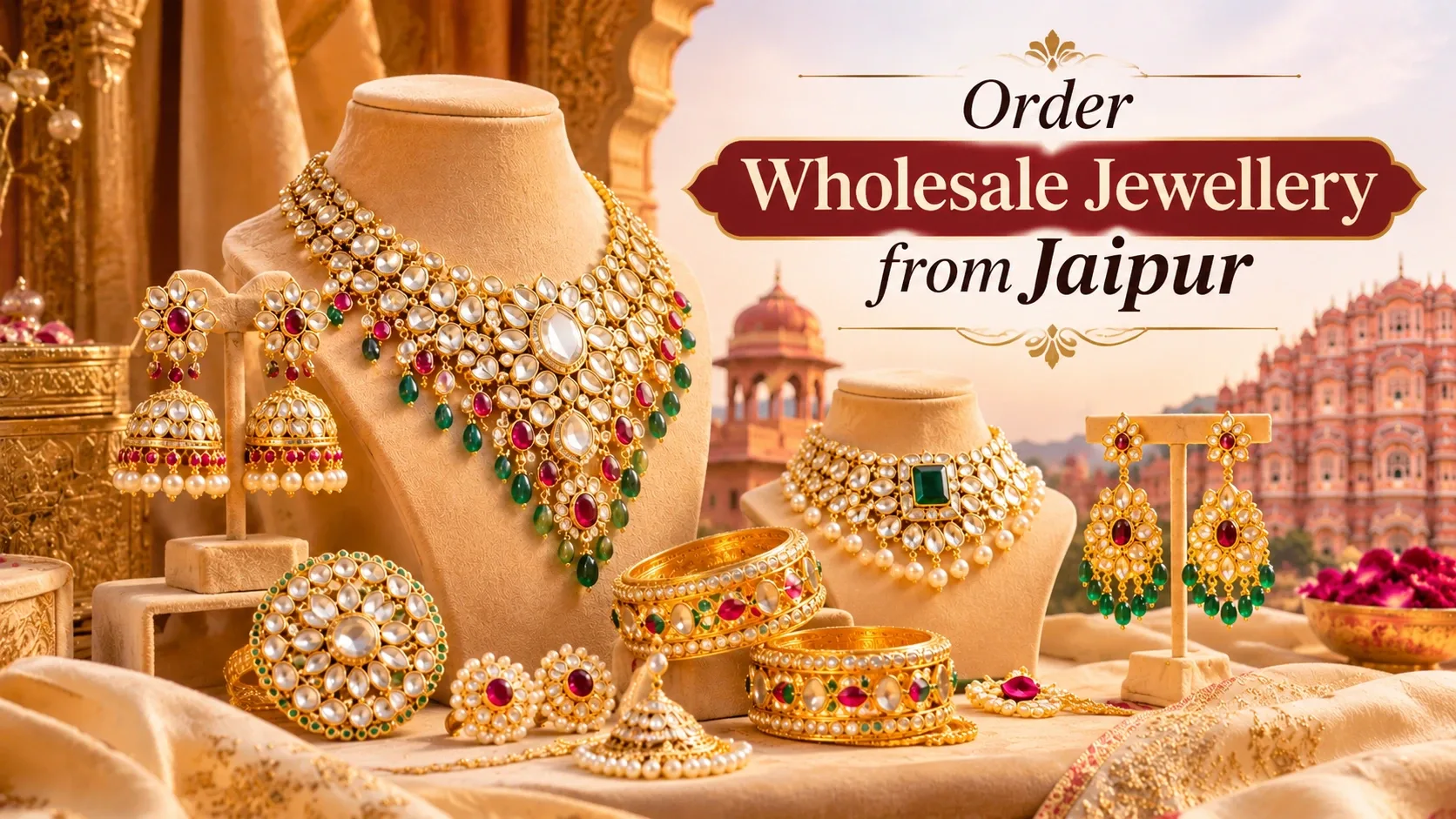
The first bulk order is always the nervous one. You're sending money to a city you might not have visited, to people you've only spoken to on the phone, for pieces that don't exist yet. Every retailer we've worked with has felt this at some point, whether they were opening a new shop or just trying a new supplier before shaadi season.
The nervousness usually comes from not knowing what happens next. So that's what this post is about. Below is exactly how a wholesale order works with us at Shivam Jewels and Arts LLP: what we'll ask you, what we'll send you, and what you can expect at each stage until the parcel reaches your counter.
If you're still at the stage of figuring out where to buy stock in the first place, start with the next two sections. If you already know you want to order from Jaipur, feel free to skip straight to Step 1.
Where Do Jewellery Shops Get Their Stock?
A lot of people assume jewellers make everything themselves. Most don't. The way the jewellery business works in India is fairly layered:
- Manufacturers design and make the pieces, usually with their own team of karigars, and sell in bulk.
- Wholesalers and traders buy from manufacturers and sell smaller quantities to shops.
- Retailers (your local jewellery shop, a boutique, an online store) sell to the final customer.
If you're wondering where to source jewellery for your business, you basically have three options. You can buy from a wholesaler in your own city, which is convenient but means paying an extra margin and choosing from whatever they happen to have. You can buy at trade shows, which is great for discovering suppliers but not for regular restocking. Or you can go directly to a manufacturer, which is where the better pricing, the custom work, and the consistent quality usually are.
Jaipur is one of the best places in India to source directly, especially for handcrafted work like Jadau Polki, Kundan, Meenakari and temple jewellery. These crafts have been practised here for generations, and many of the city's workshops supply shops all over the country.
Starting a Jewellery Business or a Gold Jewellery Shop?
We get a lot of calls from people who are just starting out. If that's you, here's what we'd honestly suggest before you place any big order:
- Pick a lane. Bridal, temple, lightweight daily wear, or something else. A shop that does one thing well is easier to build than one that tries to stock everything.
- Sort out the paperwork. You'll need GST registration, and if you're selling gold jewellery, you'll also need to register with BIS as a jeweller, since hallmarking is mandatory for gold jewellery.
- Start smaller than you want to. A tight first collection that sells through teaches you more than a big one that sits in the showcase.
- Find one or two reliable manufacturers rather than ten average ones. A steady supplier who understands your customers is worth more than a slightly lower rate.
- Think about your own designs early. If you want to build a jewellery brand rather than just run a shop, custom or private-label designs are how you stand apart. Most good manufacturers can make pieces exclusively for you.
Once you've got a rough idea of what you want to sell, the ordering process below will make a lot more sense.
Step 1: Tell Us What You're Looking For
You don't need a perfect brief. A few photos and a rough budget is honestly enough to get started. But the more you can share, the faster we can come back with something useful:
The type of jewellery (Jadau Polki, temple, Kundan, bridal sets, lighter pieces)
Reference photos, your own designs, or pieces you liked from our catalogue
Gold purity (22K, 18K, or something else)
Roughly how many pieces you need, per design and in total
Your price range per piece or per set
When you need it, especially if it's for a wedding season, Akshaya Tritiya, or Dhanteras
The easiest way is to WhatsApp us with your photos and requirements. You can also get in touch through the website if you prefer.
Step 2: Choosing or Creating the Designs
Most orders end up being a mix of two things.
Some designs come straight from our catalogue. These are the quickest to make because we've already made them before and know exactly how they turn out.
Others are custom. Maybe you want a catalogue piece in a different size or stone colour, or you have a design of your own. For these, we talk it through in detail first and prepare a design drawing for you to approve before any gold is used.
This is also when we'll tell you if something isn't practical. Sometimes a design simply can't be made at the weight or price you have in mind. We'd much rather say that now and suggest something that works than have you find out after production.
Step 3: MOQ (Minimum Order Quantity)
Most wholesale designs come with a minimum order quantity. It's not there to push you into buying more. Setting up a design takes moulds, stone sourcing, and karigar time, and that only makes financial sense over a certain number of pieces.
The MOQ changes from design to design. It depends on how detailed the piece is, whether it's new or from our existing range, and what metal and stones are involved. We'll give you the exact number for every design before you commit to anything.
Step 4: Your Quotation, Broken Down
You might have noticed that we don't list prices on our website. People sometimes find that strange, but there's a simple reason. Gold rates move every day, and the price of a handmade piece depends on its weight, its stones, and the work that goes into it. Any price we put online would be wrong within a day or two.
So instead, you get a written quote for your actual order, split into parts:
| What you're paying for | What it means |
| Metal value | Gold weight × the gold rate on the agreed date |
| Making charges | The craftsmanship, per gram or per piece depending on the design |
| Stones | Polki, Kundan, coloured stones or diamonds, listed separately |
| Wastage | The small amount of metal lost while making the piece, shown as a percentage |
| GST | As applicable, shown on the invoice |
We'll also explain how a change in the gold rate is handled between confirming your order and delivering it. If any line in the quote doesn't make sense, just ask. You should know exactly what you're paying for.
Step 5: Approving a Sample
For custom designs, and for most first orders, we make a sample before starting full production. You can approve it from detailed photos and videos, or come and see the actual piece.
This is your chance to check everything: the finish, how the stones are set, the weight, and whether it actually looks the way you imagined. If anything needs to change, we change it here. Production doesn't start until you're happy.
Step 6: Confirming the Order
Once the sample is approved, everything gets put in writing:
Designs and quantities
Gold purity and approximate weight per piece, with the agreed tolerance
Stone details
How the price is calculated and how gold rate changes are handled
The delivery date
The payment schedule
We take an advance at this point, mainly to book the gold and stones for your order. The balance is paid at the stage we've agreed on. Having it all written down means nobody has to rely on memory or dig through old chats if a question comes up later.
Step 7: Making Your Jewellery
People often ask how jewellery is actually made, and the honest answer is: slowly, and by a lot of hands. Depending on the design, a piece usually goes through several stages. The gold is first cast or shaped into the base structure. Then stones are set, and with Jadau Polki that means setting each stone by hand into pure gold, which is why it takes the time it does. After that comes any enamel (Meenakari) or detailing work, and finally polishing and finishing.
You won't be left waiting in silence through all this. We send photos and videos at the important stages, so you can see your order coming together instead of just hoping it turns out right.
Step 8: Quality Check Before Dispatch
Before anything is packed, every piece is checked:
Weight, against what was agreed
Stone setting, so every stone is firm and sits level
Finish, including the back and the inside, where shortcuts usually hide
Hooks, clasps and joints, so they close properly and are comfortable to wear
Hallmarking, with gold pieces carrying the BIS hallmark and a 6-digit HUID code
For diamonds and higher-value stones, lab certification can be arranged. If a piece doesn't pass, it goes back to the workshop. It doesn't go into your box.
Step 9: Packing and Delivery
Your order is packed piece by piece, with a proper GST invoice showing weight, purity and charges. We send it through insured shipping meant for valuables, or you can pick it up from us in Jaipur if you'd rather collect it yourself. You'll get the dispatch details as soon as it leaves.
Step 10: After the Order (and Growing From There)
If something isn't right when your order arrives, tell us and we'll fix it. That part is simple.
The more interesting part is what happens next. The retailers who grow fastest are usually the ones who pay close attention to what sells. Once you know your best-selling designs, reordering them is quicker, because the moulds and the groundwork are already done. A lot of our clients plan their reorders around the wedding and festival calendar, so fresh stock is in the showcase before demand peaks, not after.
Ready to Start?
We could tell you we're reliable, but every manufacturer says that. We'd rather you judge us by the process: clear quotes, a sample before production, everything in writing, and the chance to inspect the work before you pay the balance.
If you're planning to order wholesale jewellery from Jaipur, whether it's your first collection or your fiftieth, just WhatsApp us a few designs and your quantities. We'll take it from there.