Bridal Jewellery Trends 2026–27: Designs Every Jewellery Buyer Should Know
Published
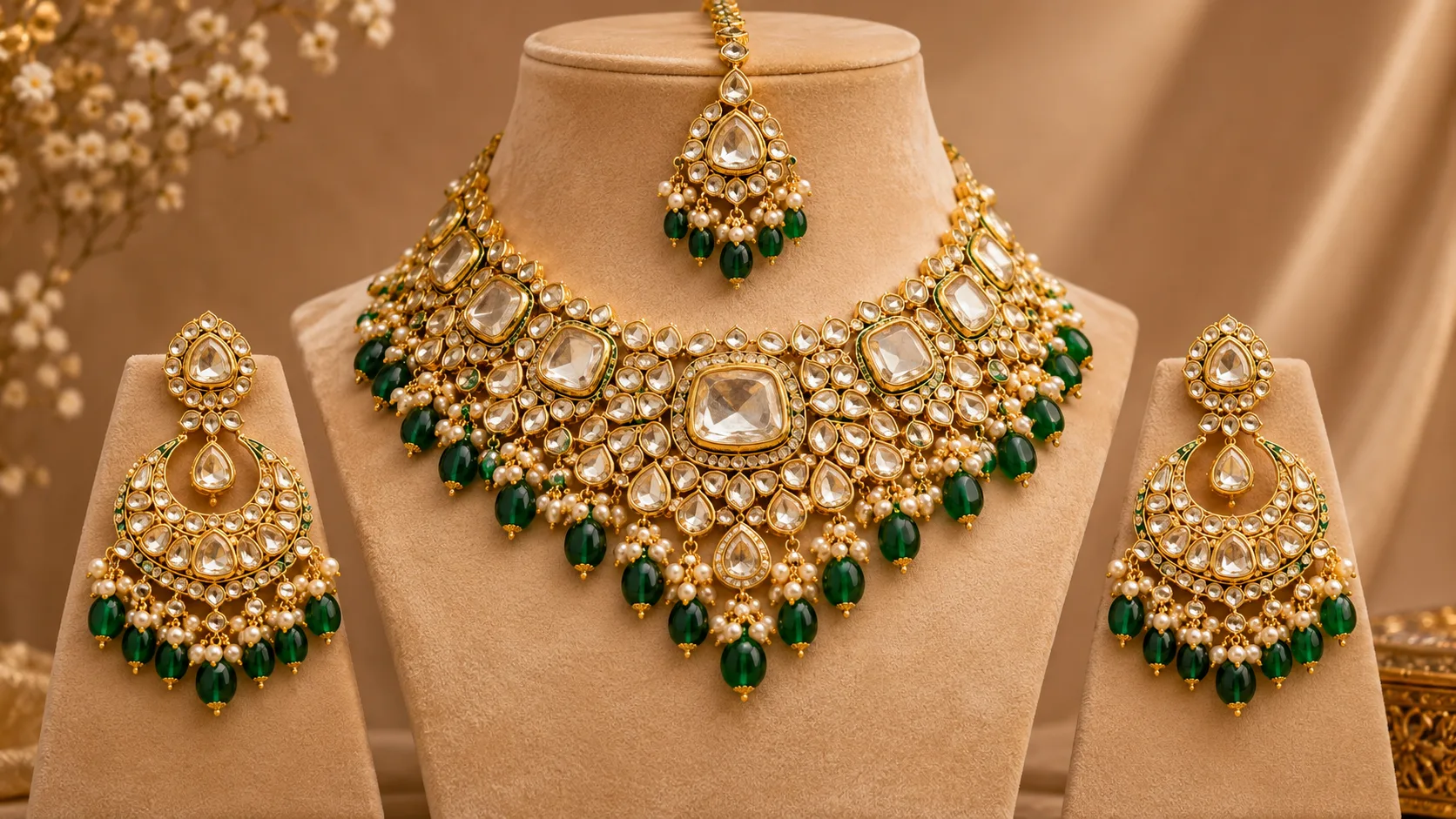
The biggest bridal jewellery trends for 2026 are Polki chokers with emerald accents, layered and convertible necklace sets, Kundan and Jadau heritage sets, temple jewellery in matte gold, and statement earrings paired with matha pattis. One theme runs through all of them: brides want pieces that look grand on the wedding day and can be worn again afterwards.
For jewellery retailers, the 2026–27 wedding season is about stocking smarter rather than stocking more. High gold prices have changed how families buy. Many now choose lighter, studded and more versatile designs instead of the heaviest set in the showcase. This guide covers the styles worth stocking, the pairings that sell, and the questions to ask your supplier before you place a wholesale order.
How has bridal jewellery styling changed since 2024?
Bridal jewellery has moved from "one heavy set for one day" towards pieces that work across several functions. Polki, Kundan and temple designs are still the base of every bridal counter. What has changed is weight, versatility and how the pieces are combined. If you want to compare with what we covered two years ago, [Explore our earlier bridal jewellery trends guide].
What Are the Biggest Bridal Jewellery Trends for 2026–27?
These are the styles appearing most often in 2026 bridal edits and jewellery brand collections. Some are long-standing classics, and some are newer styling directions.
- Polki chokers and sets with emerald accents (classic, still leading)
- Layered necklace combinations - choker plus rani haar (classic, styled in new ways)
- Single statement necklaces for brides who prefer one hero piece (growing)
- Modular and convertible sets that break into smaller pieces (emerging)
- Kundan and Jadau heritage sets with antique finishes (classic)
- Temple jewellery in matte or antique gold, now worn beyond South Indian weddings (growing)
- Pastel Polki and Meenakari with soft pink and mint tones (emerging)
- Statement earrings, ear chains and multi-chain matha pattis (growing)
- Lightweight bridal pieces that can be reused after the wedding (driven by gold prices)
Bridal Polki Set Designs: Vintage Elegance Meets Modern Styling
Polki is uncut, unpolished natural diamond set in gold, usually with foil behind it to bring out its glow. It gives a softer, warmer shine than cut diamonds. That vintage look is why Polki remains the most requested bridal style in 2026.
Here are the bridal Polki set designs retailers can plan around:
- Traditional Polki necklace sets. A full necklace with matching earrings and maang tikka. This is the core wedding-day purchase and should be the centre of your bridal counter.
- Polki chokers. A close-fitting choker frames the neckline of a heavily embroidered lehenga. It is also the easiest Polki piece to sell on its own for sangeet or reception.
- Layered Polki combinations. A choker paired with a longer rani haar or satlada. Selling these as a matched pair, rather than two separate items, makes the customer's decision easier.
- Antique-finish Polki. Polki set in gold with a slightly darker, aged finish. It suits brides looking for a "grandmother's heirloom" look.
- Polki with emerald and ruby accents. Emerald drops below a Polki choker are one of the most repeated looks in 2026 bridal photography. Ruby accents suit red and maroon lehengas.
Retailer tip: Keep at least one Polki set in each price band you serve. A customer who walks in for Polki usually wants to compare a light version and a full bridal version side by side.
Statement Bridal Chokers and Layered Necklace Sets
Brides in 2026 follow two directions: one bold statement choker, or a layered stack of two to three necklaces. Both appear in current bridal edits, so a strong bridal counter carries both.
A statement choker works for brides who prefer a cleaner neckline or a lighter overall look. A layered set usually combines a choker with one or two longer necklaces of different lengths. Layering creates the grand look without making a single piece extremely heavy.
For retailers, layered sets offer a practical advantage. The choker and the long necklace can also be sold separately to guests and family members who want only one piece.
Kundan and Jadau Bridal Jewellery Designs
Kundan and Jadau are both heritage techniques closely linked with Rajasthan, and both remain core bridal styles for 2026–27. Antique-finish Kundan sets and Kundan combined with Polki are especially popular this season.
- Kundan sets glass or gemstones in gold using refined gold foil. It gives a bright, bold look at a more accessible price.
- Jadau is the hand-setting technique in which stones are pressed into gold without prongs. Jadau work is often combined with Polki, which is why buyers search for "Jadau Polki".
- Polki refers to the stone itself: the uncut diamond.
Antique Gold and Heritage-Inspired Bridal Jewellery
Antique and matte gold finishes are a strong direction for 2026, led by temple jewellery. Temple designs with deity motifs, such as Lakshmi, are no longer limited to South Indian weddings. More brides now choose them for main wedding looks.
Heritage-inspired pieces suit customers who want jewellery that feels traditional and meaningful rather than flashy. Long temple necklaces, kasu-style designs and antique jhumkas are also easy to sell beyond the bride, to mothers and sisters.
For a retailer, an antique gold section adds variety to a counter otherwise dominated by Polki and Kundan. Shivam Jewels & Arts LLP manufactures Jadau Polki and temple jewellery in Jaipur, which lets retailers source both styles from one supplier.
Emerald, Ruby and Colourful Gemstone Bridal Jewellery
Emerald is the most repeated colour story in 2026 bridal jewellery, usually as drops or beads paired with Polki. Ruby and deep red spinel accents remain the natural match for red and maroon bridal wear.
A newer direction is pastel Polki: uncut diamonds bordered with soft pink or mint enamel (Meenakari), sometimes with pearls. These pieces suit day functions and brides choosing pastel lehengas.
Retailer tip: Match your gemstone stock to the outfit colours that sell most in your area. A store whose brides mostly wear red needs more ruby and emerald options than pastel ones.
Bridal Earrings, Maang Tikka and Matha Patti Trends
In 2026, more attention is moving from the necklace to the face and ears. Statement earrings, ear chains and multi-chain matha pattis are featured widely in this season's bridal coverage.
- Statement earrings. Large chandbalis, Polki jhumkas and long danglers. Some brides now make the earrings the hero piece and keep the necklace lighter.
- Ear chains (sahare). A chain linking the earring to the hair has made a quiet comeback. It adds drama without extra weight on the neck.
- Maang tikka and matha patti. Multi-chain matha pattis, sometimes with emerald or pearl drops, are a popular wedding-day statement.
- Face jewellery. Decorative pieces worn around the face are an emerging, niche trend. Test small quantities before committing to stock.
Retailer tip: Sell earrings and head jewellery as part of the bridal set, but also display them separately. Many customers return to upgrade only the earrings or tikka.
Lightweight and Versatile Bridal Jewellery Styling
Lightweight bridal jewellery is one of the clearest shifts of 2026, and it is driven by price as much as fashion. World Gold Council reports for 2026 found that Indian buyers adapted to record gold prices by choosing lighter-weight, lower-carat and studded jewellery rather than stopping their purchases.
For brides, lighter pieces are also easier to wear through long ceremonies. They can be worn again for festivals, family weddings and anniversaries.
What retailers can stock in this category:
- Lighter Polki and Kundan chokers for pre-wedding functions
- Modular or convertible sets - for example, a long necklace whose pendant detaches, or a layered set that splits into a choker and a single strand
- Smaller Polki studs and jhumkas that pair with existing heavy sets
- Lighter temple pendants and chains
How Jewellery Retailers Can Prepare Their Bridal Collections for Wedding Season 2026–27
The best-prepared bridal counters are planned by function, by price band and by pairing, rather than by piece. Here is a practical way to organise your stock.
1. Plan by wedding function. Most Indian weddings have several events, each with a different jewellery need.
2. Offer ready pairings. Display necklaces with matching earrings and maang tikka. A customer who sees a complete look decides faster than one who has to assemble it.
3. Cover more than one price band. Keep a light version and a full bridal version of your best-selling designs. This serves both the bride and her family.
4. Present the craft. Use short labels that explain the style, such as "Jadau Polki, hand-set in Jaipur". Customers appreciate knowing what they are buying.
5. Plan stock in phases. Order your core designs early in the season. Keep room for quick re-orders on the designs that move fastest.
How to Choose Bridal Jewellery Designs for Your Store
Choose designs based on your customers, not only on what is trending online. A practical checklist:
- Design variety: a mix of Polki, Kundan, Jadau and temple styles across chokers, long necklaces and full sets
- Customer preferences: the outfit colours, communities and budgets you serve most
- Wedding functions: pieces for each event, not just the main ceremony
- Styling combinations: chokers that pair with long necklaces, earrings that match several sets
- Inventory planning: a core range plus a small test range for newer trends like pastel Polki or face jewellery
- Supplier reliability: consistent quality across repeat orders, clear lead times and responsive communication
- Product quality and finishing: stone setting, polish, fitting of clasps and screws, and plating quality where relevant
Before placing a wholesale order, ask your supplier about minimum order quantities, lead times for re-orders, and whether designs can be customised. For a deeper guide on evaluating suppliers, read our post on [Find Reliable Jewellery Suppliers]
Why Is Jaipur Important for Bridal Jewellery Manufacturing and Wholesale?
Jaipur is one of India's best-known centres for traditional jewellery and gemstones. The city is especially associated with Kundan, Meenakari and Jadau work, crafts that developed under royal patronage in Rajasthan and are still practised by generations of karigars.
Jaipur is also a major hub for coloured gemstone cutting and trading. For retailers, this means bridal designs, gemstones and skilled craftsmanship are available in one place.
As a Jaipur-based manufacturer, wholesaler and exporter, Shivam Jewels & Arts LLP works with jewellery retailers and wholesale buyers who want Jadau Polki and temple jewellery made by local artisans.
Key Takeaways
- Polki remains the anchor of bridal jewellery in 2026–27, especially chokers with emerald accents.
- Lighter, studded and versatile pieces are growing because of high gold prices.
- Stock both single statement necklaces and layered sets.
- Temple jewellery and antique gold are moving into mainstream bridal looks.
- Plan your bridal counter by function and price band, with ready necklace-and-earring pairings.
Conclusion: Plan Your Bridal Collection for 2026–27
The 2026–27 bridal season favours timeless styles made more wearable: Polki, Jadau, Kundan and temple jewellery in lighter, more versatile forms. Retailers who plan by function, offer ready pairings and keep a mix of price bands will be best placed to serve both brides and their families.
If you are building or refreshing your bridal collection, Shivam Jewels & Arts LLP can share its Jadau Polki and temple jewellery designs for wholesale enquiries. Send us a wholesale enquiry on WhatsApp