Custom Jewellery Manufacturing in India: From Design to Bulk Production
Published
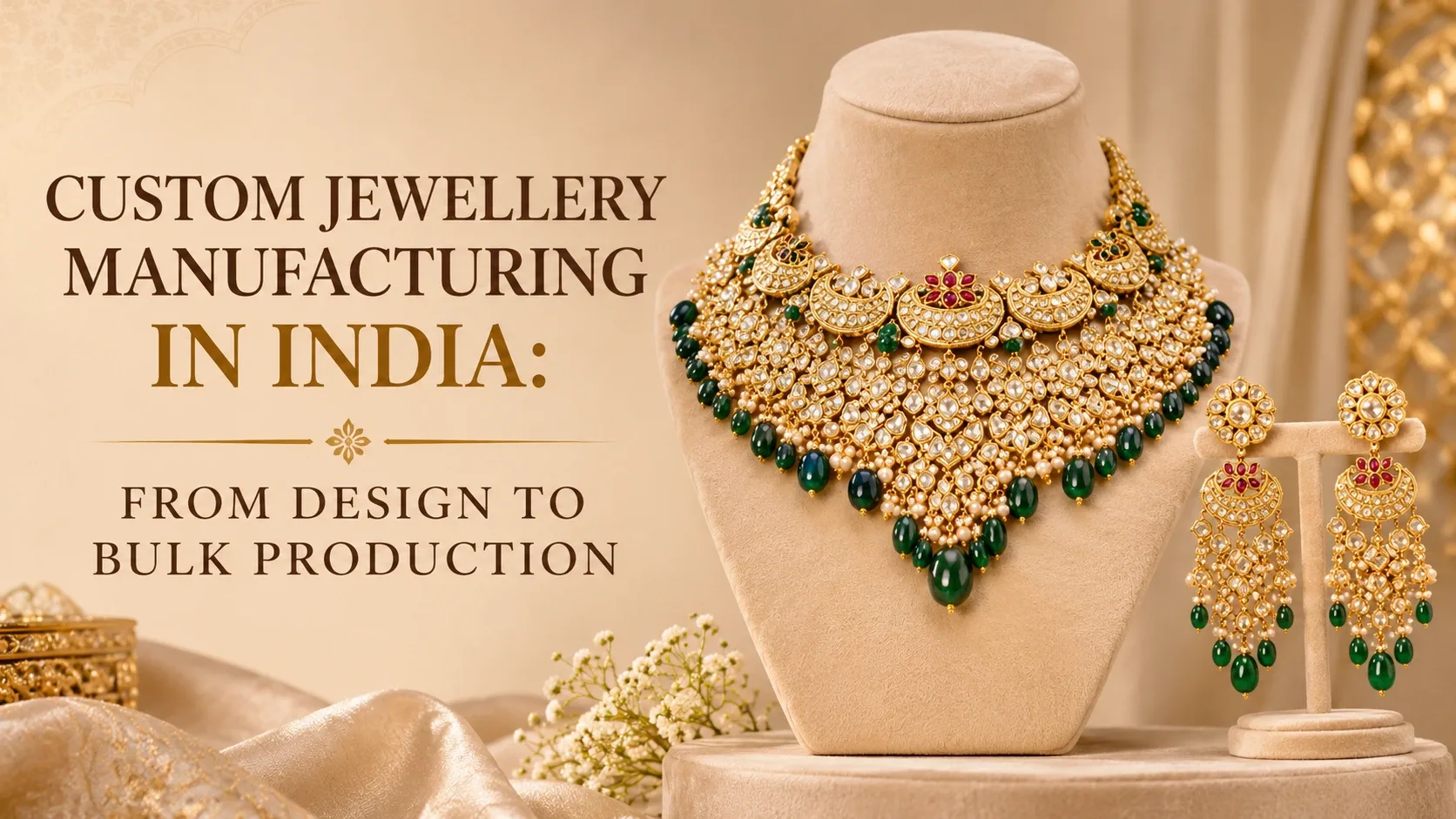
Custom jewellery manufacturing means a manufacturer produces jewellery to your design, materials and specifications instead of selling you existing stock. For retailers, wholesalers, boutique owners and growing jewellery brands, it is the most direct way to build a collection customers can't find in every other store.
If you are looking for a custom jewellery manufacturer in India, this guide explains how the process works, step by step. It also covers which categories suit custom production, how it compares with buying ready-made, and what to clarify before you place an order.
What Is Custom Jewellery Manufacturing?
Custom jewellery manufacturing is the process of creating jewellery to a buyer's own design, materials, dimensions and quantity. You bring the idea; the manufacturer turns it into a finished, repeatable product.
Your starting point can be a sketch, a reference photo, an existing sample or a digital design file. Depending on the project, custom work can cover:
- Bridal jewellery sets
- Polki and Kundan jewellery
- Traditional and temple jewellery
- Contemporary and lightweight designs
- Gemstone and coloured-stone jewellery
- Necklaces, earrings, bangles and bracelets
- Festive and occasion-wear collections
The result is a product range built around your brand and your customers, rather than around what happens to be in stock.
Why Source Custom Jewellery from India?
India combines generations of handcraft skill with modern production methods, which makes it practical to produce both intricate traditional pieces and simpler contemporary designs. For B2B buyers, four advantages stand out.
Skilled artisans and traditional techniques
Stone setting, Kundan work, Jadau, Polki and enamel detailing are specialised crafts. Experienced karigars can reproduce fine detail consistently across a production run, which matters when your design depends on it.
A wide range of design styles
One manufacturing base can cover royal Rajasthani designs, Kundan and Polki, Meenakari-detailed pieces, temple jewellery, statement necklaces and minimal modern styles. That makes it easier to build collections for different customer segments.
Room to customise details
Before production starts, you can typically discuss:
- Design, pattern and dimensions
- Stone type, colour and placement
- Metal finish
- Weight and other specifications
- Packaging and branding, where offered
Bulk and repeat orders
Working directly with a manufacturer lets you plan quantities, design variations and repeat orders around your sales cycle. Minimum order quantity (MOQ), capacity and pricing vary by manufacturer and by design complexity, so agree on them before you commit. If you only need ready designs in volume, our guide to ordering wholesale jewellery from Jaipur covers that route.
Why Jaipur Is a Leading Custom Jewellery Manufacturing Hub
Jaipur is known for its gemstone trade, Kundan and Jadau work, Meenakari enamelling and traditional Rajasthani bridal jewellery. Its long-established network of artisans and suppliers makes it a natural base for buyers looking for a custom jewellery manufacturer in Jaipur.
Styles closely associated with the city include:
- Kundan jewellery
- Jadau Polki jewellery
- Meenakari jewellery
- Gemstone jewellery
- Traditional Rajasthani bridal sets
This depth of craft lets brands combine heritage techniques with contemporary styling. Read more about why Jaipur is the hub of handcrafted jewellery in India.
How Does Custom Jewellery Manufacturing Work? (7 Steps)
Most custom projects follow the same seven stages. Knowing them in advance helps you brief the manufacturer clearly and set realistic timelines.
Step 1: Share your design brief
Send whatever best shows your idea: sketches, reference photos, existing samples, digital files or written specifications. Include the jewellery category, target customer, preferred style and an estimated quantity. The clearer the brief, the fewer revisions later.
Step 2: Design development and technical planning
The manufacturer turns your brief into a buildable design. This covers dimensions, structure, stone placement, detailing, materials, weight and finish. For complex pieces, a technical drawing or digital (CAD) model may be prepared so both sides agree on the design before any metal is used.
Step 3: Material and component selection
Next, materials are confirmed. Depending on the piece, these may include gold or another specified metal, silver, gemstones, uncut diamonds (Polki), Kundan stones, pearls, beads and clasps. Put purity, weight, stone quality and finish in writing if they matter to you.
Step 4: Sample development and approval
A sample lets you check the real piece before bulk production. When reviewing it, confirm that:
- The design matches your reference
- Stones are placed and set correctly
- Finishing meets your standard
- Dimensions are accurate
- The piece matches the agreed specifications
Approve any changes on the sample, not after production starts.
Step 5: Production
Once the sample is approved, production begins. A typical sequence is:
- Metal preparation
- Base structure
- Stone setting
- Soldering and assembly
- Surface detailing
- Polishing and finishing
- In-process inspection
Traditional handcraft and modern methods are often combined, depending on the style.
Step 6: Quality inspection
Before packing, each piece should be checked for design accuracy, stone setting and alignment, surface finish, clasps and fastenings, dimensions and specified weight. For gold and silver, confirm hallmarking requirements at this stage too (see below).
Step 7: Packaging and delivery
Finally, the order is packed and dispatched. Agree on packaging, quantities, delivery timelines and shipping arrangements before production begins. Keep your approved specifications on record - it makes repeat orders faster and more consistent.
Popular Categories for Custom Jewellery
Custom bridal jewellery
Bridal is one of the most important categories for Indian jewellery retailers. Buyers typically commission coordinated sets: Polki necklace sets, Kundan chokers, long bridal necklaces, chandbali earrings and maang tikkas. See what's trending in our guide to bridal jewellery trends for 2026–27.
Custom Polki and Kundan jewellery
Polki and Kundan are central to traditional and occasion-wear collections. Common customisations include stone shapes, colour combinations, necklace lengths and matching earrings. Explore our Jadau Polki collection for reference designs.
Custom gemstone jewellery
Gemstones let brands work with colour: emerald greens, ruby reds, blue stones and pearls. They suit collections that need to stand apart visually.
Contemporary and lightweight jewellery
Not every customer wants heavy traditional pieces. Lightweight necklaces, statement earrings and modern designs for parties and everyday wear can also be produced to your specifications. Our Modern Polki collection shows how traditional craft translates into lighter styles.
Custom Manufacturing vs Ready-Made Jewellery
Both routes work; the right one depends on your timeline and how distinctive your range needs to be.
| Factor | Custom manufacturing | Ready-made jewellery |
| Design | Made to your requirements | Chosen from existing designs |
| Customisation | High | Limited |
| Brand identity | Distinctive, exclusive range | Same designs may be sold elsewhere |
| Lead time | Depends on complexity and quantity | Faster when stock is available |
| Planning needed | Design, sample and production stages | Selection and ordering only |
| Best for | Brands and retailers building unique collections | Buyers who need stock quickly |
Many businesses use both: ready-made pieces for fast-moving stock, and custom designs for signature collections.
How to Choose a Custom Jewellery Manufacturer in India
The right partner affects quality, consistency and how smoothly repeat orders run. Before you commit, check:
- Category experience - have they made the type of jewellery you want? Bridal Polki and lightweight contemporary pieces need different skills.
- Design capability - can they work from your sketches and references, and produce a sample first?
- Quality control - how are setting, finishing and specifications checked before dispatch?
- Transparent quotation - does the quote separate material, stones, making charges, development, finishing, packaging and shipping?
- MOQ - is their minimum order realistic for a first or test collection?
- Timeline - do they give a clear estimate for sampling, approval, production and dispatch?
- Communication - will they update you during production and support future changes?
For a deeper look at each factor, read how to choose a jewellery manufacturer: 7 key factors.
Hallmarking and Quality: What Buyers Should Know
In India, the Bureau of Indian Standards (BIS) runs the hallmarking system for gold and silver jewellery. Agree on purity, hallmarking and documentation with your manufacturer before you confirm an order.
Gold: hallmarking is mandatory in notified districts, a list BIS has expanded in phases since June 2021. A valid gold hallmark has three parts:
- The BIS Standard Mark
- The purity (fineness) mark
- A six-digit alphanumeric HUID (Hallmark Unique Identification) number
Anyone can verify the HUID using the BIS CARE app.
Silver: hallmarking is voluntary. However, since 1 September 2025, any silver article that is hallmarked must carry an HUID.
Is Custom Jewellery Manufacturing Right for Small Businesses?
Yes - as long as the manufacturer accepts your order size and design requirements. Custom production helps smaller businesses create their own designs, test new collections, offer exclusive pieces and build a recognisable brand.
Before starting, weigh the MOQ, any sample costs, the production timeline and your total investment. Starting with a small test collection is often the safest approach. Our guide on how to source jewellery for your small business covers the wider sourcing picture.
Start Your Custom Jewellery Collection with Shivam Jewels & Arts
A successful collection starts with a clear design idea and a manufacturer who can deliver it consistently. Whether you are planning a bridal range, Polki and Kundan sets or lighter contemporary pieces, custom manufacturing gives you control over what reaches your customers.
Shivam Jewels & Arts LLP is a Jaipur-based jewellery manufacturer and wholesaler specialising in Jadau Polki, temple, open-setting and modern Polki jewellery for B2B buyers.
Have a design in mind? Share your references and quantity on WhatsApp or discuss your custom jewellery requirements with our team.