

Blog Details
Types of Jewellery: Different Jewellery Types from Traditional to Modern Styles
.jpeg)
Jewellery has never been a simple form of accessory. It belongs to the culture, tradition, and personal style. Since ancient times until the current time, jewellery has been significant in the mode of expression of beauty, status, and feelings. The jewellery has, over the generations, been passed on through the family treasure, worn during the festivals for celebrating special occasions in life.
When we are talking about the type of jewellery, we are talking about the wide range of designs, materials and meanings. The jewellery comes in many different types and each of them has its legend. Certain forms of jewellery are extremely traditional with ties in the past and others are contemporary, which are designed to fit in the fast life today.
Jewellery over the time has evolved in terms of design, weight, and use. Previously, jewellery was generally heavy and elaborate and worn by the royalty on special occasions. Light and simple designs are also in demand today in addition to the traditional ones. In modern jewellery, the trend is on comfort and daily wear although it retains beauty and grace.
Understanding Jewellery Types and Their Classification
There are numerous ways of classifying jewellery. The knowledge of these categories helps to select the appropriate piece in order to present it to yourself or as a present to another person. Types of jewellery are not bound by a rule. They are categorised according to the convention, artisanship, and purpose.
Categorisation of Jewellery
Jewellery is commonly divided in the following categories:
Traditional Jewellery vs Contemporary Jewellery
- Traditional jewellery is both culturally and historically based.
- It is about the comfort and simple designs in modern jewellery.
- Traditional jewellery is mostly worn during weddings and festivals.
- Contemporary jewellery can be worn on a daily basis and parties.
Based on Craftsmanship
- Jewellery which has been made by hand, through ancient methods.
- Jewellery that is made by machines with contemporary finishes.
- Jewellery done by professional craftsmen and cuts.
Based on Usage
- Bridal jewellery
- Daily wear jewellery
- Occasion jewellery and party jewellery
- Special events statement jewellery
In the whole range of these, traditional jewellery is particularly important in the Indian culture. Now we are going to examine various kinds of Indian jewellery.
Types of Traditional Jewellery in India
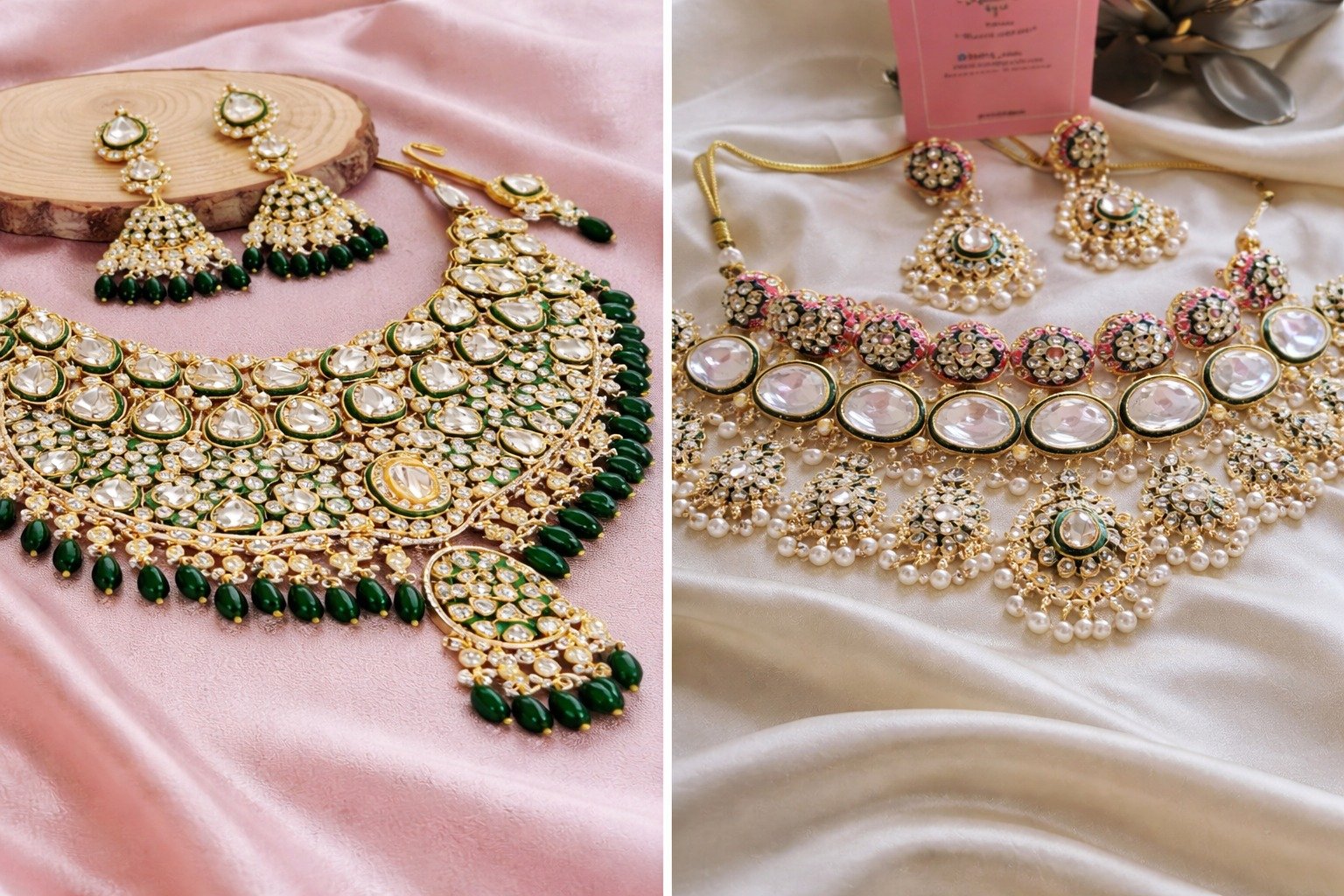
The jewellery wore as a part of traditions portrays a rich culture of India, royal history, and craftsmanship. Such types of jewellery were distinguished by magnificent designs and timeless beauty.
Polki Jewellery – A Crown Traditional Jewellery
One of the most ancient and traditional jewellery in India is Polki jewellery, which is advisory royal jewellery. It is particularly common in Rajasthan, as well as royal families.
Jadau Polki jewellery is crafted with natural cut diamonds. Such diamonds are not cut or polished like modern jewellery, and this does add the raw and natural look to Polki jewellery. The diamonds are encircled in gold through a special technique known as Jadau.
The Speciality of Polki Jewellery
- Uses natural, uncut diamonds
- Created in the traditional Jadau technique
- Made with high-purity gold
- Has a soft, elegant shine
Jadau Craftsmanship
Jadau is a conventional jewellery-making where stones are attached on gold without glue. Expert craftsmen carve gold so delicately to fit each stone. It is something which is time-consuming, patient, and experience-driven.
Royal and Heritage Value
Polki jewellery is a centuries-old stylistic attire of kings, queens, and even royal brides. It is an icon of tradition and affluence. Polki jewellery is something that is inherited by many families.
Bridal Relevance and Ceremonial Relevance
One of the popular jewellery preferred to be used as bridal wear is Jadau Polki jewellery. The Polki necklaces, earrings, bangles, and maang tikka worn by brides are made during weddings. It gives elegance and classic to bridal appearance and it is ideal in major events.
Kundan Jewellery – An Ancient Traditional Art
Other well-known traditional jewellery is Kundan jewellery. It is, however, confused with Polki jewellery, though there are significant differences.
Kundan Polki jewellery, instead of using uncut diamonds, makes use of glass stones or precious stones. The jewellery is made to look rich and colourful as these stones are placed on gold foil.
How Kundan Jewellery Is Made
- Stones are placed on a base
- Stones are held in place with the help of gold foil
- The back is a common area where Meenakari work is done
Distinction Between Kundan and Polki
- Polki uses uncut diamonds
- Kundan is made of precious stones or glass
- Polki is less artificial, more natural
- Kundan is richer and more ornamented
Cultural and Traditional Significance
Many years have passed since Indian weddings and festivals are adorned with Kundan jewellery. It is common in North India and commonly placed in bridal sets. It is ideal at festive events with its colourful bright colours and classic designs.
Other Popular Types of Traditional Jewellery
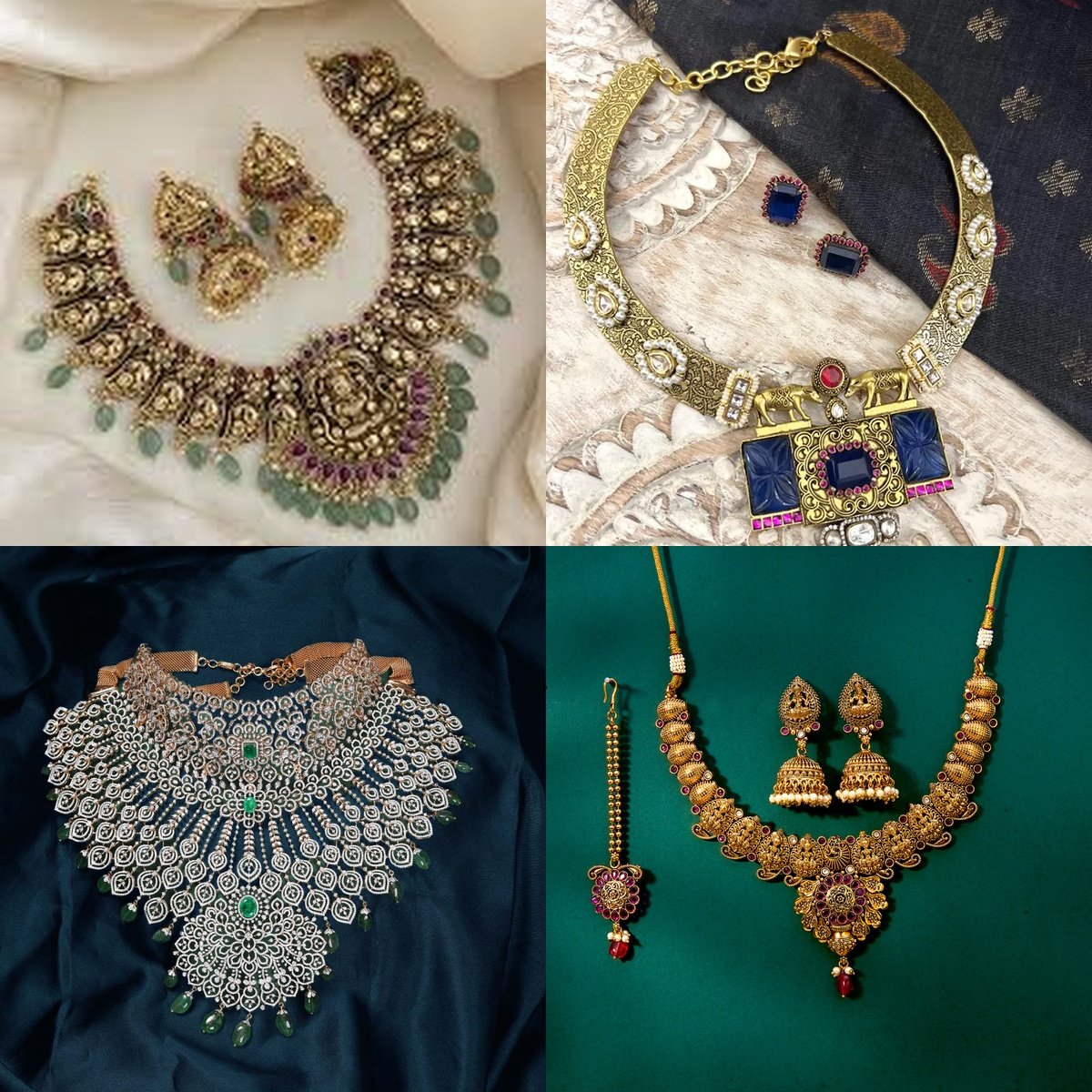
India is full of other traditional forms of jewellery besides Polki and Kundan.
Temple Jewellery
- Inspired by gods and temples
- It is frequently used in classical dances
- Made mainly in gold
Meenakari Jewellery
- Famous for the coloured enamel
- Designs are painted on metal
- Very popular in Rajasthan
Antique Gold Jewellery
- Has an old-world look
- Features dull gold finish
- Traditional designs are often used
All these types of jewellery are different aspects of the Indian culture.
Types of Modern Jewellery for Contemporary Lifestyles
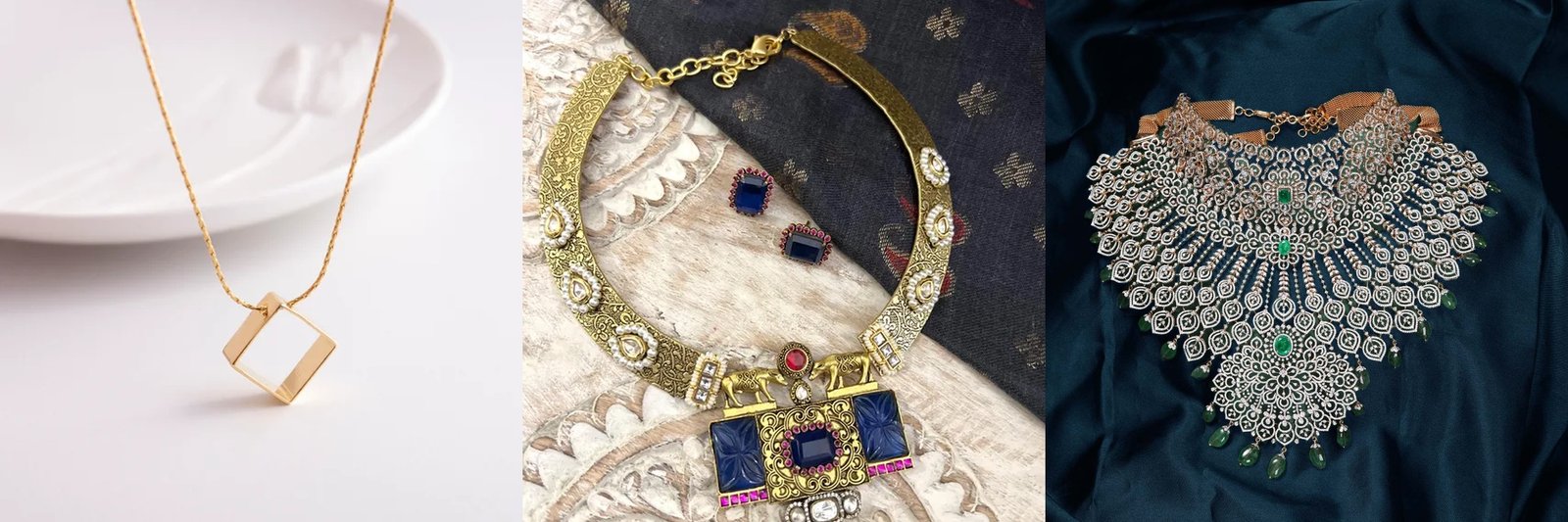
The jewellery in the contemporary world is designed to fit the modern lifestyle. Wearers have changed their taste to jewellery which is light in weight, easy to wear, and multi-purpose. The contemporary types of jewellery have a foundation on the simple beauty and comfort.
Open Polki Jewellery – Traditional Craft with a Modern Touch
Open Polki jewellery is a new turn of the old Polki jewellery. It retains the glamour of Polki diamonds and eliminates sumptuous gold backgrounds.
The Meaning of Open Polki Jewellery
Open Polki jewellery is an open setting of diamonds at the back with gold. This makes the jewellery light and helps to reduce weight.
Light and Airy Attractiveness
- Easy to wear for long hours
- Applicable to traditional and contemporary outfits
- Modern brides will feel comfortable
Perfect Moments for Polki Designs Nowadays
- Weddings
- Receptions
- Engagements
- Family celebrations
Open Polki jewellery is a mixture of tradition and modern comfort; therefore, it is quite popular nowadays.
Other Types of Modern Jewellery
Modern jewellery has many other designs which are used in both everyday and special purposes.
Diamond Jewellery
- Clean and elegant look
- Suitable for formal events
- Fashionable as engagement rings
Minimal Gold Jewellery
- Simple and light designs
- Perfect for daily wear
- Easy to match with outfits
Fusion Jewellery
- Combination of old and new designs
- Wears with ethnic and western outfits
- Creative and unique designs
Fashion Jewellery
- Created using non-precious materials
- Trend-based and affordable
- Ideal for casual wear
The contemporary jewellery is concerned with convenience, adaptability, and self-identification.
How to Choose the Right Jewellery Type for You
The selection of the jewellery chosen is dependent on numerous factors. Being aware of your needs assists you in making superior decisions.
What to Look at When Selecting Jewellery
Occasion
- Wedding jewellery
- Jewellery that is used in everyday life
- Statement party pieces
Outfit Coordination
- Jewellery to match the colour of the outfit
- Weight the outfits heavily and lighten the jewellery
- Other accessories should not be overdone
Comfort and Weight
- Wear lightweight designs when worn over a long period
- See to it that jewellery is not tight or heavy
Quality and Realness
- Checking the quality of stones and gold
- Buy from trusted jewellers
- You have to know the workmanship
Personal Style
- Select designs which are in line with your personality
- Old-fashioned classic style
- Simple and trendy stylish appearance
Jewellery ought to make you feel good and relaxed.




 Chat with us !